Better Worse Font Adds Dazzle to Designs
Looking for a font that adds visual interest and personality to your projects? Better Worse is a fun halftone font that can bring a unique flair to any design. With its playful style and versatility, it's perfect for creative professionals and hobbyists alike.
What Is Better Worse?
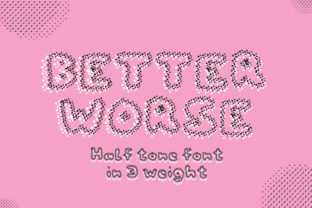
Better Worse is a halftone typeface designed to catch the eye and create a sense of movement or texture in text. Unlike traditional fonts, it uses a patterned look that mimics printed halftones, giving your designs a retro or artistic edge. This font comes in three weights: light, regular, and bold, allowing you to choose the right level of emphasis for your message.
Its distinctive appearance makes it ideal for use in logos, posters, packaging, and digital media where a bit of visual flair is needed. Whether you're designing for print or online, Better Worse can add a memorable touch to your work.
Why Choose Better Worse?
If you're looking for something different from standard sans-serif or serif fonts, Better Worse offers a fresh approach to typography. It’s particularly useful when you want to stand out or evoke a certain mood, like nostalgia or creativity.
- Versatile: Works well across various mediums and sizes.
- Playful: Adds a fun element to serious or casual content.
- Easy to Use: Simple integration into design software and web projects.
Designers often use this font to highlight key phrases, headings, or call-to-action buttons. Its unique texture can also help differentiate text from the background, making it more readable in some cases.
Where Can You Use Better Worse?
The applications of Better Worse are wide-ranging. Here are a few practical examples of how it might be used:
- Branding: Create eye-catching logos or brand identities with a unique typographic twist.
- Marketing Materials: Use it on flyers, banners, or social media posts to draw attention.
- Web Design: Incorporate it into website headers, buttons, or section titles for added visual appeal.
- Print Media: Add it to magazines, brochures, or packaging for a stylish finish.
- Personal Projects: Use it in DIY crafts, greeting cards, or photo collages for a fun, artistic feel.
No matter the context, Better Worse brings a dynamic quality to any text it touches. However, it’s important to consider how it will look in different environments before using it extensively.
Things to Consider Before Using Better Worse
While Better Worse is visually appealing, it may not be suitable for every project. Here are a few things to keep in mind:
- Legibility: Ensure the text remains easy to read, especially at smaller sizes or in low-contrast settings.
- Context: Match the font with the tone and purpose of your content. It may not fit formal or professional documents.
- Compatibility: Check if the font works well with other design elements, such as images, colors, and layouts.
- Licensing: Always confirm the licensing terms to ensure you’re allowed to use it in your intended way.
Taking these factors into account can help you make the most of Better Worse without compromising the overall effectiveness of your design.
Getting Started with Better Worse
If you're new to using Better Worse, start by experimenting with simple projects. Try applying it to a headline or a short phrase and see how it looks in different contexts. Pay attention to how it interacts with other design elements and adjust accordingly.
You can find Better Worse in many font marketplaces or design tools. Once downloaded, it should be easy to install and use in your preferred graphic design or web development software. Don’t hesitate to test it out in various formats—print, digital, or even animated—to discover its full potential.
Remember, while Better Worse is great for adding dazzle, it should complement your message rather than overshadow it. Balance is key to creating effective and aesthetically pleasing designs.
Final Thoughts on Better Worse
Better Worse is more than just a font—it's a creative tool that can elevate your designs with its unique halftone style. Whether you're a beginner exploring typography or a professional looking to add a fresh look to your work, this font offers a versatile and exciting option.
By understanding its strengths and limitations, you can use Better Worse effectively in a variety of situations. As with any design choice, experimentation and practice will help you get the best results. So go ahead and try it out—you might just find a new favorite in your design toolkit.