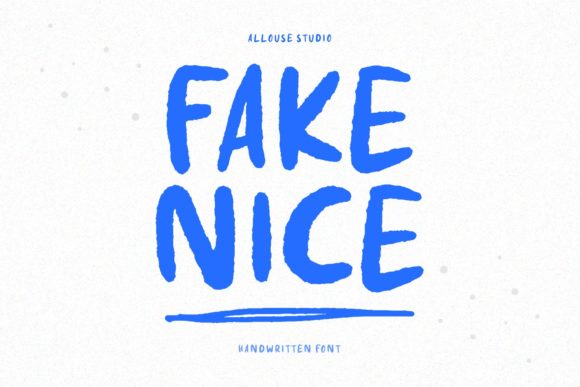
Fake Nice Font
Imagine a font that commands attention with its bold, thick letterforms—something that feels both modern and timeless. Fake Nice is exactly that: a display font with a striking presence that can elevate your design projects from ordinary to extraordinary. As a graphic designer or creative professional, you know the power of typography in shaping visual communication. With Fake Nice, you're not just choosing a typeface—you're making a statement.
In today’s fast-paced digital landscape, where users are bombarded with information, the right typography can cut through the noise. Fake Nice brings a sense of confidence and clarity to any project it graces. Its thick strokes and clean lines make it ideal for creating visual hierarchy, ensuring key messages stand out without effort. Whether you're working on branding, editorial design, or social media content, this font offers a unique aesthetic that aligns well with modern aesthetics and professional presentation.
Branding and Logo Design
Typography plays a crucial role in building brand identity. A well-chosen font can reflect the values, tone, and personality of a brand. Fake Nice is particularly effective for logos that need to convey strength, creativity, or a touch of playfulness. Its bold character makes it suitable for brands aiming to stand out in a crowded market.
When designing a logo with Fake Nice, consider how it interacts with your color palette and other visual elements. Pairing it with contrasting colors or minimalist backgrounds can enhance readability and visual impact. This font also works well as part of a layered logo design, adding depth and dimension.
Marketing Materials and Social Media Graphics
From business cards to posters, marketing materials benefit greatly from strong typography. Fake Nice adds a sense of authority and approachability, making it perfect for headlines, taglines, and promotional copy. Its legibility at larger sizes ensures that your message is clear and impactful, even from a distance.
Social media platforms thrive on eye-catching visuals, and Fake Nice can be a game-changer here. Use it for post titles, captions, or call-to-action buttons to draw attention and encourage engagement. The font's versatility allows it to blend seamlessly into various formats, whether you're creating Instagram stories, Facebook ads, or LinkedIn posts.
Consider these practical applications:
- Headlines and subheadings in blog posts or articles
- Call-to-action buttons on websites and landing pages
- Event banners and promotional flyers
- Product packaging and labels
- Presentation slides and infographics
Design Workflow and Best Practices
While Fake Nice is visually appealing, its effectiveness depends on thoughtful application. Always evaluate how it fits within your overall design workflow. Ensure consistency across all touchpoints, from web design to print materials. Consider scalability—will the font remain readable when resized? Will it maintain its visual appeal in different contexts?
Another important factor is compatibility with your existing brand systems. If you're updating a brand identity, test Fake Nice against your current color schemes, imagery, and layout styles. It should complement—not clash—with the rest of your design language.
Remember, typography is more than just choosing a font; it's about how that choice influences user experience and perception. By selecting Fake Nice strategically, you're investing in a design asset that supports both aesthetics and communication.
In the world of graphic design, every detail matters. From typography to color theory, each element contributes to a cohesive and compelling visual narrative. Fake Nice is a powerful tool in your creative arsenal—one that, when used wisely, can transform the way your audience perceives your brand and message.